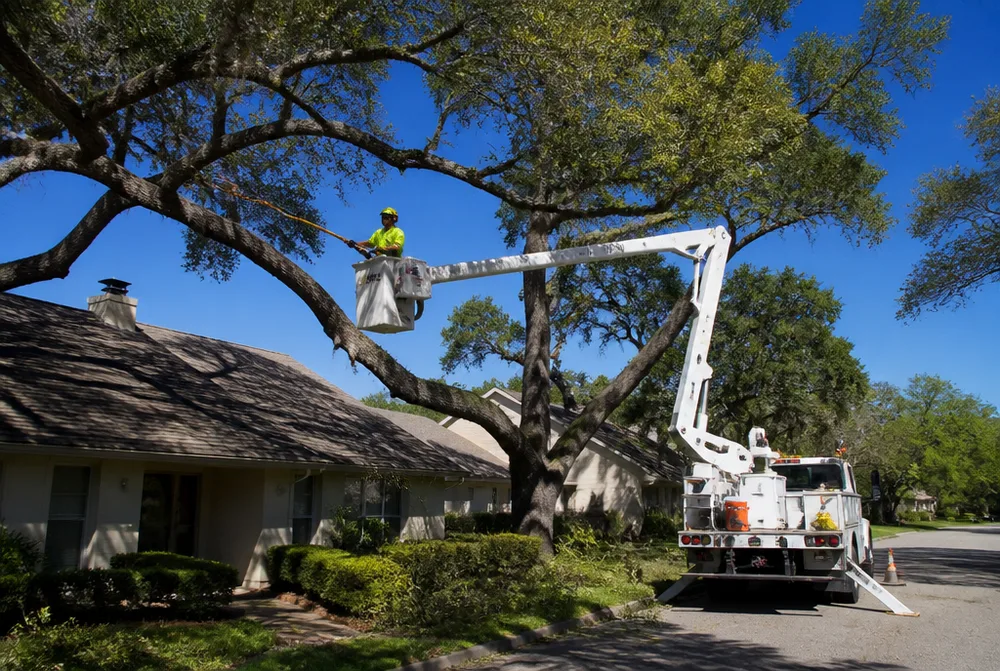
Huntsville Tree Removal Pros installs cabling and bracing systems for Huntsville homeowners who want to save a valuable or mature tree with a structural weakness, rather than removing it -- the opposite job from removal, for trees worth preserving.
How We Handle Tree Cabling & Bracing
When Cabling Makes Sense
Trees with co-dominant stems, included bark, or a history of splitting are common cabling candidates -- we'll give you an honest assessment of whether cabling is the right call versus removal.
Dynamic vs. Static Cabling
Different cabling systems suit different situations -- flexible dynamic systems that allow natural movement versus rigid static support for more severe structural issues.
Bracing for Split or Weak Unions
Bracing rods reinforce weak branch unions from the inside, often paired with cabling for a complete support system.
Ongoing Inspection
Cabled and braced trees benefit from periodic reinspection as they grow and the tree's structure changes over time.
A mature Southern red oak, water oak, or pecan in an established Huntsville yard represents decades of growth that can't be replaced by planting a new tree -- cabling and bracing is often the right call for a structurally compromised but otherwise healthy tree worth keeping, rather than defaulting straight to removal.
How Cabling and Bracing Work
A cable is a steel strand or synthetic rope installed high in the tree -- roughly two-thirds of the way from the weak fork to the branch tips -- that limits how far two leaders can pull apart in the wind. A brace is a threaded steel rod installed through a weak union or a crack lower down, holding the wood together. Many trees get both.
The professional standard is ANSI A300 Part 3, which covers supplemental support systems -- cabling, bracing, guying, and propping -- including inspection and maintenance after they're installed.
Good Candidates and Trees That Should Come Down
Cabling works best on a healthy tree with one specific, identifiable weakness: two trunks of similar size competing from the same point, a tight V-shaped fork with bark pinched inside it, or a big limb that has grown heavy over a roof or patio.
It isn't a fix for a tree that's already failing. Major decay in the trunk, a crack running into the base, a dead or dying crown, or roots that have started lifting are signs the tree may need to come down instead. An honest assessment should tell you which side of that line your tree is on.
Why Save a Tree Instead of Removing It
A mature oak or pecan shading an older Huntsville home took decades to grow, and a new tree won't replace it in your lifetime. For a tree like that with one structural problem, cabling often costs less than a large removal and keeps the shade, the look of the property, and the tree itself.
Inspection After Installation
A support system isn't install-and-forget. Trees grow, hardware wears, and cables that were snug can loosen or grow into the bark. The A300 standard includes inspecting support systems, so plan on having the tree and hardware checked periodically and after major storms.
If you want an arborist's opinion on whether a tree is a good candidate, you can verify any ISA Certified Arborist's credential in the International Society of Arboriculture's online directory. See the cost guide for typical cabling prices.
Frequently Asked Questions
Is cabling a permanent fix?
Cabling manages risk rather than eliminating it entirely -- it's a long-term support system that needs periodic reinspection, not a one-time fix.
How much does tree cabling cost?
Most residential cabling jobs run $300-$800 depending on tree size and the number of support points needed.
Will cabling save a tree that's already splitting?
Depends on severity -- we'll give you an honest assessment of whether cabling can address existing damage or whether removal is the safer call.